Home Table of Contents

10 January 2024, Volume 4 Issue 1
    

  • Select all
    |
    ARTICLES
  • Charmaine H. Lam
    Hong Kong Studies. 2024, 4(1): 1-15.
    This analysis pursues a transnational and spatial approach to the history of Victoria Park to examine the construction and experience of space within Victoria Park in Hong Kong. It applies Henri Lefebvre's categories of spatial analysis to facilitate an examination of how British and local Chinese meanings and experiences of space collided to create an arena of contested power within the spatial practices of the park. These resulting tensions provide an understanding of the larger tensions within Hong Kong's colonial order that points to the importance of recognizing local contributions to urban development and space in colonial histories.This framework provides an equal focus on the roles of the colonial government and the local Chinese working classes in shaping the use and meaning of Victoria Park and, thus, the urban landscape of colonial Hong Kong. Such a focus presents an intervention for a group that has been much overlooked both within Hong Kong's colonial history and within the broader field of imperial urban history.
  • Vincent Ho, Novem Ho Tsz-wing
    Hong Kong Studies. 2024, 4(1): 17-35.
    This article presents an alternative perspective to the prevailing view that the Hong Kong Zoological and Botanical Gardens were established solely through negotiations between colonial authorities and the Hong Kong government. We argue that the role of the imperial botanical network should also be considered. The network facilitated the explorations, imaginations, and connections of botanists in Hong Kong from the British occupation to the establishment of the gardens, revealing their contribution to Hong Kong's significance in the field of imperial botany. Through exploring the people and events surrounding the gardens' establishment, the article offers a unique perspective on revealing Hong Kong's early colonial period.
  • Lorraine Lau
    Hong Kong Studies. 2024, 4(1): 37-56.
    A Hong Kong-born biracial poet based in the United Kingdom since childhood, Sarah Howe explores in her debut collection, Loop of Jade (2015), the complexities of Hong Kong through the lens of diaspora. This article examines Howe's representations of language and silence in relation to writing Hong Kong as a third space between dominant cultural forces. I will explore self-writing as a mode of cultural production that, through the process of hybridization, frequently challenges the boundaries of hierarchical binaries. Writing in English, Howe employs her limited knowledge of the Chinese language to weave a diasporic family narrative that is defined through its fragmentation and ambiguity. Framing her mother's childhood stories as a vehicle for understanding her family history in Hong Kong, Howe establishes a connection between her mother's reticent storytelling and her loss of access to her “mother tongue,” her mother's native language. Adjacent to her exploration of language, her visualization of silences through poetic form underscores the marginality of self-writing in diaspora while also questioning the assumed truthfulness of family history and, by extension, the history of “home.” With a focus on the dynamics between motherhood and mother tongue, as well as language and silence, in Loop of Jade's family narratives, I will argue for a reading of Howe's poetry as the formation of a Hong Kong diasporic identity that draws on hybridity and marginality. Howe's experimentation with language, genre, and poetic form articulates a Hong Kong identity that is not “pure” but rather rooted in the incommensurability of differences.

  • Guilherme Augusto Laidens Feistauer, Elaine Wisbey
    Hong Kong Studies. 2024, 4(1): 57-82.
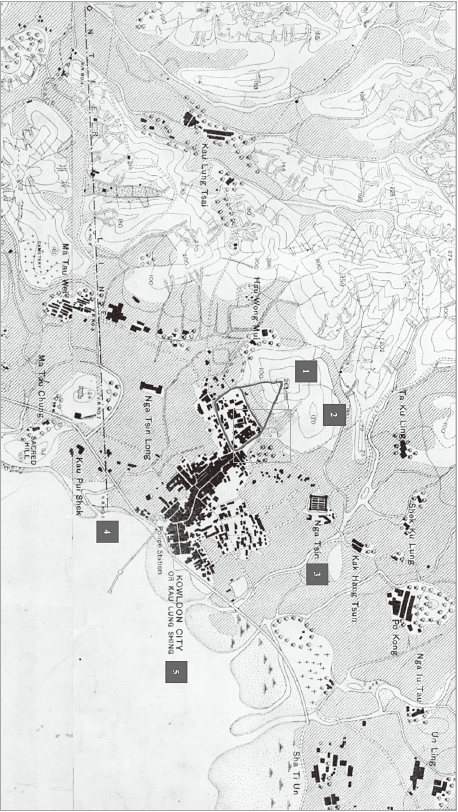
    At one point considered to have been the most densely populated place on earth, nearly thirty years after its demolition, Hong Kong's Walled City of Kowloon continues to be a topic of significant cultural memorialization and lively academic discussion. Yet despite the researchers' best efforts, its origin and early history continue to be riddled with fundamental inaccuracies. Tracing back to key primary sources, this article upholds that the Walled City was selectively built by the Chinese on empty government land between late 1846 and 1847, systematically arguing that it was therefore not an architectural palimpsest with an undue “centuries-old” history. Seeking to bring clarity as to “why” predominant academic discourses to date have differed, the article scrutinizes two of the most influential published narratives on the topic by Elizabeth Sinn and Julia Wilkinson, demonstrating how a fundamental lack of integration of key primary sources has resulted in the current state of knowledge. Closely aligned with and committed to efforts to decolonize the historical record, the article also proposes that such sources should be made more accessible for proper study, in the hope that narratives about the Walled City's origin and early history take account of the perspectives of those who built it.
  • Charles Lam, Raymond Pai
    Hong Kong Studies. 2024, 4(1): 83-103.
    This article discusses how humor contributes as a resource to the teaching of Hong Kong, both in the context of Cantonese language learners across the globe and for a wider audience who are interested in social and identity issues in “homeland” Hong Kong. We argue that humor is an effective resource in teaching Hong Kong since humorous texts in the broad sense are often nuanced and multi-layered, which are important qualities that match Hong Kong's (in)famous plurality and hybridity. Drawing on Shih Shu-mei's decentralized and pluricentric concept of Sinophone studies, this article argues that humorous texts help learners better appreciate the diversity and dynamicity in Hong Kong culture and Cantonese. In the context of heritage language learners, we show that humor and parody are excellent vehicles to allow students to connect with the target language in their own style, rather than tracing back to certain stereotypical yet imaginary roots of “homeland” that go against the psychological ownership of students' learning. In the Asian (“homeland”) context, we illustrate the importance of comedy studies through a course in a popular education setting outside of universities. Through the course on humor studies and the stress on Cantonese language, aspects related to the Hong Kong identity are introduced while covering various topics, such as popular culture, parody, and the negotiation of the Hong Kong identity. This article shows how humor engages with the audience and enables dialogues and discussions on the otherwise divisive and abstract topic of identity, even in the local “homeland” context, in which speakers assume a relatively stable and homogeneous identity. We stress that learners' active engagement can be leveraged by the incorporation of both consumption and production (also known as “prosumption”) of humorous content and learning materials that suit their own learning style and motivation, which is particularly significant for adult learners.
  • BOOK REVIEWS
  • Reviewed by Yip Ka-che
    Hong Kong Studies. 2024, 4(1): 105-108.
  • Reviewed by Hercules Chu Kok-yin
    Hong Kong Studies. 2024, 4(1): 108-110.